Welcome
MK Touch Therapy is a registered 501(c)(3) nonprofit organization dedicated to compassionate, specialized care.Thank you for your interest in my work and the care I offer. I am a licensed Massage Therapist with specialized training and certification in compassionate massage and therapeutic touch for individuals navigating cancer and serious illness, living with neurological conditions and disabilities, under palliative and hospice care, or those experiencing the profound effects of grief and bereavement, while honoring our veterans.This work is deeply sacred to me. Every session is guided by intention, presence, and respect—offering a gentle pause in a world that can feel overwhelming, uncomfortable, or rushed. Through mindful touch, I create a safe and nurturing space where clients are invited to rest, recover, and reconnect with themselves. In this space, touch becomes a quiet companion—supporting peace, comfort, wellbeing, and a deeper sense of wholeness as each person honors their own unique journey.
Communities We ServeMK Touch Therapy supports those:• Undergoing cancer treatment or in remission
• Living with neurological conditions or disabilities
• Receiving palliative or hospice support
• Navigating serious illness
• Experiencing grief or loss
• Veterans of military service
• Caregivers & Care PartnersCompassionate, medically informed touch therapy thoughtfully adapted for communities navigating life's most challenging seasons.
If you’re curious or seeking clarity, the FAQ offers thoughtful answers to the questions clients most often ask about massage and touch therapy in this capacity.Explore ABOUT to learn more about the heart, intention, and philosophy that guides this practice.Visit MEET YOUR THERAPIST to learn more about my background, training, and credentials.
Massage & Touch Therapy Services
Supporting Comfort, Dignity, and Quality of Life. Thoughtfully Adapted. Compassionately Delivered.
Oncology
Compassionate support throughout cancer treatment, recovery, survivorship, and beyondThis service is offered to gently support those experiencing cancer and the effects of cancer treatment. The intention is to ease discomfort, soften physical and emotional strain, and provide a sense of calm during what can be an overwhelming time.Care is given using soothing lymphatic massage techniques that encourage healthy lymph flow, along with light to medium pressure tailored to each person’s comfort and needs. This gentle approach is widely regarded as one of the safest and most supportive forms of massage therapy for oncology clients, both during treatment and in remission, helping to reduce the risk of developing further complications that may arise from ordinary massage therapy practices, such as Lymphedema.Each session is thoughtfully adapted to honor the individual—considering age, stage of life, treatment plans, and medical history. A detailed medical intake and consultation allow care to be offered with sensitivity, safety, and respect.
Taking the first step can feel overwhelming. Our Specialized Care Introduction Session offers an opportunity to meet with your therapist, discuss your unique needs, and experience a customized massage so you can make an informed decision about future care.
Palliative & Hospice
Comfort-focused care honoring dignity, quality of life, and connection during serious illness and end-of-lifeFrom soft hand placement and gentle lotioning of the skin to light or medium massage strokes, this calming therapy is offered with care, patience, and presence. Each session is designed to support individuals as they navigate the physical, emotional, and mental effects of serious illness, meeting each individual exactly where they are in each moment. Thoughtful touch can help ease pain, soften tension, invite rest, and support more peaceful sleep. Just as importantly, it offers comfort to to patients and their families who may be feeling anxious, fearful, lonely, or overwhelmed—through a soothing presence, mindful hands, and compassionate one-on-one human connection. Within this gentle approach, clients are invited to find a safe place to rest, breathe, and be met with a steady, gentle support.This service may also include personalized guidance for parents, family members, and caregivers who wish to learn safe, nurturing ways to comfort their loved ones through touch.Because of its gentle, adaptive nature, this approach is considered one of the safest forms of massage and touch therapy for those receiving palliative or hospice care.
Taking the first step can feel overwhelming. Our Specialized Care Introduction Session offers an opportunity to meet with your therapist, discuss your unique needs, and experience a customized massage so you can make an informed decision about future care.
Neurological & Adaptive
Individualized care for people with neurological conditions, disabilities, mobility challenges, and unique sensory needsCompassionate, adaptive touch therapy for individuals with unique physical, developmental, sensory, and neurological needs.Every person experiences the world through their body in a different way. Our adaptive massage sessions are thoughtfully tailored to meet each individual where they are—whether they are living with a neurological condition, mobility limitations, developmental differences, chronic illness, or heightened sensory needs.These sessions focus on comfort, relaxation, body awareness, gentle mobility support, and meaningful human connection through safe, therapeutic touch.Care is customized based on each individual’s abilities, communication style, preferences, and needs. Sessions may include gentle massage techniques, positioning support, calming touch, sensory considerations, and collaboration with caregivers when appropriate.Adaptive touch therapy may benefit individuals experiencing:• Neurological conditions such as ALS, muscular dystrophy, or other progressive conditions• Developmental disabilities and physical disabilities• Limited mobility or wheelchair dependence• Increased muscle tension, stiffness, or discomfort• Sensory sensitivities or difficulty with traditional massage environments• The need for compassionate, individualized wellness supportOur goal is not to “fix” the body, but to honor it—creating moments of comfort, connection, and improved quality of life.
Taking the first step can feel overwhelming. Our Specialized Care Introduction Session offers an opportunity to meet with your therapist, discuss your unique needs, and experience a customized massage so you can make an informed decision about future care.
Grief & Bereavement
Gentle support for those navigating loss, transition, and the emotional journey of griefGrief lives in the body as much as the heart.Whether you are moving through bereavement, the loss of a loved one, anticipatory grief, the end of a relationship, caregiving exhaustion, illness, or another life transition, the body often carries the weight long after the mind has tried to make sense of it.This gentle touch therapy session offers a safe place to soften the body’s protective holding patterns, calm the nervous system, and create space for rest, breath, and presence.You are welcome exactly as you are — whether your grief feels heavy, numb, quiet, complicated, or difficult to name. There is no expectation to talk, explain, or hold yourself together here. Conversation, silence, tears, prayer, and simple rest are all welcome.The intention of this session is to provide compassionate touch and grounded support for the body during times of loss, transition, and the reorganization that follows what has changed.
Veteran
Individualized care tailored to the lasting physical, mental, and emotional effects of military service.Military service can place extraordinary demands on the body, mind, and spirit. Whether you're living with chronic pain, recovering from injury or surgery, navigating cancer or neurological conditions, grieving the loss of a fellow service member or loved one, or simply seeking a place to rest and reconnect with your body, every session is thoughtfully adapted to meet your individual needs.Care is always provided with compassion, dignity, respect, and without judgement. My goal is to create a safe space where you can experience comfort, therapeutic touch, and genuine human connection- meeting you exactly where you are.
In 2/2026, MK Touch Therapy officially became a registered nonprofit organization. This step was taken to expand access to oncology, palliative & hospice, neurological & adapative care, as well as grief & bereavement services— while honoring veterans— and to allow community involvement & support to directly fund compassionate touch for those navigating their most vulnerable moments in life.
Oncology Massage & Touch Therapy
Supportive bodywork during active treatment, survivorship, and remission.This service helps ease:
• fatigue
• pain
• anxiety
• sleep disruption
• treatment-related tension
• nervous system overwhelmEach session is adapted to your diagnosis, treatment plan, side effects, and energy level to provide safe, restorative support.Best for: active chemotherapy, radiation, immunotherapy, survivorship, remission
Breast Cancer Recovery & Mobility Therapy
A specialized therapeutic recovery session for women healing from breast surgery, reconstruction, radiation, and lymph node removal.This service may include:
• oncology-informed massage
• myofascial release
• scar mobilization
• adhesion release
• joint mobilization
• gentle nerve gliding
• chest and shoulder stretching
• functional movement restorationDesigned to restore tissue glide, ease pulling, improve overhead reach, and help the body feel safe in movement again.Best for: mastectomy, lumpectomy, reconstruction, radiation fibrosis, cording, chest wall tightness
Oncology Manual Lymphatic Drainage Therapy
Gentle lymphatic support for swelling, heaviness, fluid retention, and post-surgical recovery.This specialized service supports:
• lymph node removal recovery
• post-surgical swelling
• chest and arm heaviness
• early lymphedema risk reduction support
• tissue congestion after treatmentSessions are adapted to surgical pathways, radiation history, and tissue tolerance.Best for: swelling, heaviness, fluid support, lymphatic rerouting
Palliative & Hospice Comfort Touch Therapy
Gentle comfort-centered touch for those living with serious illness, advanced disease, or end-of-life care needs.This work focuses on:
• pain relief
• breath ease
• nervous system calming
• emotional comfort
• positioning support
• caregiver respite supportSessions are offered with deep respect for dignity, comfort, and the changing needs of the body.Best for: advanced illness, hospice, home care, caregiver support
Grief & Bereavement Support Touch Therapy
A restorative space for the body during loss, transition, and the months that follow.Grief often lives in the body as:
• tightness
• exhaustion
• shallow breathing
• sleep disruption
• numbness or heaviness
• nervous system fatigueThis service offers grounding, compassionate touch to help the body soften and feel supported through mourning and life after loss.Best for: recent loss, anticipatory grief, caregiver grief, long-term bereavement
Pricing
45 min $85
60 min $105
75 min $125
90 min $150
2 hr $210Add on a 15 min. caregiver relief massage to any appointment for only $20 more (please notify upon booking)Off-site appointments are subject to a travel fee of $20 per service.
About MK Touch Therapy
In 2/2026, MK Touch Therapy officially became a registered nonprofit organization. This step was taken to expand access to oncology, palliative & hospice, neurological & adapative care, as well as grief & bereavement services— while honoring veterans— and to allow community involvement & support to directly fund compassionate touch for those navigating their most vulnerable moments in life.
This work found me slowly.Over time, through listening— to families, to the spaces where words fall away and presence becomes everything— I came to understand that touch, when offered with care and intention, can be a profound source of comfort during life’s most vulnerable seasons.My nonprofit practice is devoted to providing compassionate, medically informed bodywork that supports comfort, dignity, and connection for individuals navigating cancer and serious illness, neurological conditions and disability, under the care of palliative and hospice, experiencing the effects of grief, or military service. I work with individuals whose bodies require thoughtful adaptation, deep respect, and an approach that honors what is changing— physically, mentally, emotionally, and spiritually.While most massage therapy focuses on relaxation or musculoskeletal care, this work lives in a quieter place. It asks for patience, humility, and the ability to meet individuals exactly where they are on that day. I chose this path intentionally, knowing that compassionate care for medically complex and tender populations is both uncommon and deeply needed.Specialized Training & ExperienceI have pursued advanced education in massage and touch therapy for vulnerable and medically fragile populations— training that goes beyond techniques to include safety considerations, medical awareness, emotional sensitivity, developmental understanding, and trauma-informed care.This means every session is adapted with care:
• Pressure is adjusted thoughtfully
• Areas of concern are approached with caution and consent
• Energy levels, treatment side effects, age, and comfort are always respected
• The body’s story is listened to, not overriddenI continue to learn, collaborate, and deepen my understanding, because this work carries responsibility. When someone places their trust in my hands during a vulnerable time, that trust is never taken lightly.What Sessions Feel LikeMy approach is slow, intentional, and grounded in presence.Sessions are never rushed or forced. Touch is offered as an invitation, not an expectation. Some days the work may be focused on easing physical discomfort; other days it may simply be about offering a calm, steady presence when the body feels overwhelmed.Above all, my goal is to help my clients feel safe in their bodies again— even when those bodies are changing, tired, or unfamiliar.Supporting Caregivers & FamiliesA meaningful part of my work is supporting caregivers and loved ones.Caregiving often comes with exhaustion, fear, and the quiet grief of wanting to help but not knowing how. I offer guidance and education when appropriate, helping caregivers learn simple, gentle ways to offer touch that feels supportive rather than intimidating— especially during serious illness and the end of life.Sometimes touch becomes the clearest way to say I’m here when nothing can be fixed. I believe caregivers deserve support just as much as those they are caring for— whether that's a child, a parent, family member, friend, or a partner.A Practice Rooted in CompassionThis practice exists to serve those who are often overlooked or underserved in traditional massage settings. It is shaped by compassion, presence, and a deep respect for the human experience.Whether someone is in treatment, in remission, living with complex medical needs, approaching the final chapters of life, or in the process of grieving, my intention remains the same:to offer care that honors dignity, comfort, and connection.
Policies
Availability: Same-day appointments are limited and cannot be guaranteed. Clients are encouraged to schedule in advance to secure their preferred date and time.Pricing: Reviewed periodically and thoughtfully updated to reflect the level of care provided as services evolve. Prices are subject to change without prior notice.Gift certificates: Offer a heartfelt way to share comfort, care, and kindness with someone you cherish. Each certificate may be applied toward any service and thoughtfully personalized to honor the recipient’s individual needs and circumstances. Whether offered in support, in celebration, or as a meaningful expression of kindness, a gift certificate becomes an invitation for rest, reconnection, and compassionate touch.Cancellation Policy: Your health and well-being always come first. If you need to cancel or reschedule, I ask for 24 hours notice whenever possible, so this time may be offered to another client in need. Late cancellations or missed appointments may be subject to a fee, and repeated last-minute changes may require prepayment for future sessions. This policy exists to honor the care, presence, and preparation that go into each session. Thank you for holding this time with respect.For questions, comments, or to book an appointment: Please call or text 985-205-9415 or email [email protected]. I will return your call or message as soon as possible, typically within a few hours, and always within 24 hours.
Specialized Care Introduction Session
Includes New Client Consultation + Introductory Therapeutic MassageYour first appointment is intentionally designed to help us get to know one another and create the safest, most comfortable experience possible.Before your massage begins, we’ll spend time reviewing your health history, intake form, and goals for treatment. If you have a caregiver, family member, or support person you’d like involved, they are welcome to participate in the conversation so we can work together to create a care plan tailored specifically to your needs.During this consultation, we’ll discuss topics such as:• Your comfort goals & treatment priorities
• Positioning options & supportive cushioning
• Mobility, transfers, & accessibility needs
• Fatigue, pain, sensory preferences, or sensitivities
• Medical conditions, treatments, medications, & medical equipment
• Skin integrity & any areas requiring special precautions
• Massage products best suited to your skin & personal preferences
• Communication preferences during your session
• Any questions or concerns you or your support team may haveFollowing the consultation, you’ll receive a personalized adapted therapeutic massage, with techniques continually adjusted to prioritize your comfort, safety, and individual needs.At the conclusion of your visit, we’ll discuss how your body responded to treatment, answer any remaining questions, and, if you choose to continue care, recommend the session length and treatment plan that best supports your goals.• 60 min $85
(Consultation + 30 min massage)• 90 min $125
(Consultation + 60 min massage)(Travel Fee is waived for this session)
Donations
Your generosity helps create moments of comfort, dignity, and meaningful human connection during some of life’s most tender passages. Through compassionate massage and therapeutic touch, I offer gentle, intention-led care to those navigating cancer treatment or remission, individuals living with neurological conditions or disabilities, those receiving palliative or hospice support, and their loved ones processing grief.This work is not only about easing physical discomfort— it is about being met with kindness when the body, mind, and heart feel most vulnerable. It offers a steady, caring presence when the world feels overwhelming, and gently reminds each person that they are never alone.Your donation directly supports the time, care, and attentive presence each session requires. It helps make this work available when it is most needed— allowing care to be offered respectfully, without rush, and rooted in dignity.Your generosity also quietly sustains the continued growth of this work. Each contribution (big or small) becomes part of ongoing learning, research, and deep listening— allowing my work to continually evolve with greater sensitivity, wisdom, and grace across every stage of life. With your support, I am able to tend to my practice more fully, guided by both science and lived, hands-on experience— offering touch that remains responsive to the ever-changing needs of those I serve.Your support reaches beyond one person and one session. By donating, you join a sacred circle that allows this rare and specialized work to continue to exist, and to remain open and accessible to all those who seek it, wherever they may be.If you feel even a small pull to support this mission, please know that your generosity is deeply welcomed, sincerely appreciated, and received with heartfelt gratitude. Your contribution truly makes a difference. Your role helps transform the quiet and seemingly small moments of touch therapy into deeply felt and unforgettable expressions of comfort and connection. These moments settle into the heart and remain indefinitely, becoming priceless memories of one-on-one presence during some of life’s most challenging seasons. That, in itself, is a profound gift, made possible only through your generosity.If this cause moves you, please click the secure donation link below. No matter the amount, your support ensures this meaningful work will continue.Thank you so much,
Meg
Your gift becomes a quiet pause for someone else— a soft refuge where one can rest, breathe, and feel held during serious illness or disability, end of life, or profound grief. Its impact will continue far beyond a single moment, carrying comfort forward in ways that are deeply felt and never forgotten. Thank you!
MK Touch Therapy is a registered 501(c)(3) nonprofit organization. All donations are tax-deductible to the fullest extent allowed by law and directly supports compassionate specialized touch therapy for individuals navigating illness, vulnerability, and grief. For items purchased in support of our mission, the deductible amount is limited to the portion exceeding the fair market value of goods received. A written acknowledgement of your gift will be provided for your records and tax purposes.
Mission Statement
Specialized Approach to Massage and Touch TherapyA Rare and Compassionate PracticeMassage therapy is often associated with relaxation and relief— but compassionate, medically informed touch for those navigating cancer or serious illness, living with neurological conditions or disabilities, facing end of life, or profound grief is far less common.Within the massage profession, fewer than 1% of therapists go on to specialize in hospice or palliative care, and less than 5% pursue advanced training in oncology massage. This work lives at the quiet edges of the field, where technical skill must be paired with presence, adaptability, developmental awareness, and deep respect for the body’s changing story at every stage of life.My practice exists in that space.I specialize in massage and touch therapy for medically fragile and vulnerable populations— care that is intentionally gentle, carefully adapted, and guided by both clinical understanding and compassion. Each session honors where the body is today, not where it “should” be.This work is about more than comfort.It is about restoring safety to touch during times when the body may feel unfamiliar, fragile, or overwhelmed. It is about meeting clients, and their families, with dignity and care in treatment, in remission, in transition, and in the tender moments at the end of life.A core part of my mission is to support caregivers— to help them learn how to offer loving, safe touch to their family, friends, partners, and loved ones when words fall short and time feels precious. Gentle touch can become a language of presence, reassurance, and connection—especially when nothing else can be fixed.This is not typical massage therapy.It is specialized, uncommon work— rooted in listening, humility, and humanity across all ages.It is care that honors the whole person— young or old.
Booking
Services are offered by appointment only to ensure thoughtful individualized care. Walk-ins are not available.Studio Location:
Within Clubhouse Salon
1800 W Causeway Blvd Ste. 122
Mandeville, LA 70471Mobile In-home Coverage areas:
LA Northshore: Slidell, Pearl River, Lacombe, Mandeville, Covington & Madisonville. LA Southshore: Metairie & Kenner.Travel Fee:
All off-site mobile appointments are subject to a travel fee of $20 per service to cover expenses related to time & energy for travel, gas & vehicle wear, transport, setup, breakdowns, and in-home personalized accommodations.Pricing:First Visit / New Client Session:
(Includes consultation & introductory massage)
• 60 min $85
• 90 min $125
(Travel Fee Waived for this session)
Continuing Care / Personalized Sessions:
(For returning clients following their initial visit)
• 30 min $65
• 45 min $85
• 60 min $105
• 75 min $125
• 90 min $150
• 2 hr $205Caregivers:
• 20 min $40For questions, comments, or to book an appointment:
Please call or text 985-205-9415 or email [email protected]. I will return your call or message as soon as possible, typically within a few hours, and always within 24 hours.
Honoring Our Veterans
Proudly Honoring Those Who Have ServedMilitary service can leave lasting effects on the body, mind, and spirit. Wherever you are on your journey, you deserve compassionate, individualized care that honors both your experiences and your goals.At MK Touch Therapy, I provide medically informed massage and therapeutic touch tailored to your unique needs, comfort level, and personal wellness goals. Every session is thoughtfully adapted to support you with respect, dignity, and compassion.It is my privilege to care for those who have served our country.Every veteran has a story. Every story deserves to be heard. Every body deserves compassionate, personalized care.
Veteran FAQ
1. Is this massage only for combat veterans?
• No. This service is available to all veterans and military service members, regardless of branch, role, deployment history, or length of service. Every individual’s journey is unique, and care is thoughtfully adapted to meet your personal needs and goals.2. What makes veteran massage different from a traditional massage?
• Veterans Care & Therapeutic Touch recognizes that military service can leave lasting physical, emotional, and neurological effects. Sessions are individualized with consideration for injuries, surgeries, chronic pain, mobility limitations, medical conditions, and personal comfort, creating a safe and respectful environment where you can fully relax.3. Do I have to talk about my military service during my session?
• Not at all. Some veterans enjoy conversation, while others prefer quiet. You are welcome to share as much or as little as you choose. Your session is guided by your comfort, and your privacy is always respected.4. Can massage help with chronic pain or old injuries?
• Massage may help reduce muscle tension, improve relaxation, increase comfort, and support overall well-being. While it is not a treatment or cure for medical conditions, sessions are thoughtfully adapted to work safely around previous injuries, surgeries, and other health considerations.5. What if I have scars, joint replacements, or medical devices?
• Your care is always individualized. Before your session, we’ll discuss your medical history, surgeries, scars, implants, joint replacements, or other medical devices so your massage can be safely adapted to your needs.6. Can I receive massage if I have cancer, a neurological condition, or another serious illness?
• Often, yes. With my advanced training in oncology massage, palliative and hospice care, adaptive and neurological touch therapy, and medically informed massage, sessions can often be modified to safely accommodate many health conditions. Your safety and comfort are always the highest priorities.7. What should I expect during my first appointment?
• Your first visit begins with a consultation about your health history, current concerns, goals, and preferences. Together, we’ll create a treatment plan that is comfortable, individualized, and adapted specifically for you.8. Is massage covered by the VA or health insurance?
• Coverage varies depending on your benefits and healthcare provider. While MK Touch Therapy does not guarantee insurance or VA reimbursement, you may wish to speak with your healthcare team or benefits coordinator to explore available options.
Intake Forms
General Massage & Touch Therapy FAQ
1. What is compassionate massage and touch therapy?
• Compassionate massage and touch therapy is a gentle, intention-led approach to care that prioritizes comfort, safety, and dignity. Unlike traditional massage practices, this work adapts to the physical, emotional, and energetic needs of each individual, offering soothing touch that supports wellbeing during times of illness, vulnerability, or transition. Rather than following a routine, sessions unfold slowly and are shaped by comfort, need, and choice.2. How is this different from traditional or spa massage?
• This work is slower, gentler, and deeply individualized. Techniques are adapted for medical conditions, sensory sensitivities, fatigue, pain levels, and emotional needs. The focus is not on fixing the body, but on offering comfort, ease, and support during times that may feel physically or emotionally tender. Touch is adapted moment by moment and always honors personal boundaries, while fostering a meaningful human connection in a safe and respectful way.3. Is massage and touch therapy safe for medically fragile clients?
• Yes. When provided by a therapist properly trained in compassionate and medically informed care, this approach is considered safe and supportive for those living with serious illness, receiving end-of-life care, or experiencing the effects of grief. Each session is guided by a detailed medical intake, careful listening, clear communication, and an ongoing awareness and attention to client comfort and safety.4. What can I expect during a session?
• Sessions are calm, unhurried, and responsive. Clients may remain fully clothed or comfortably draped, and are supported in positions that feel restful and safe. Touch may include gentle hand placement, light massage, or soothing lymphatic techniques. Positioning, pressure, and pacing are always adapted; pauses, silence, and rest are always welcome.5. How is care adapted for each individual?
• Care is always personalized and responsive and offered with deep attentiveness to the whole person. Each session is shaped by the individual’s health history, age or developmental stage, energy level, physical comfort, sensory needs, and emotional state on that particular day. Techniques, pressure, pacing, and positioning are gently adjusted as needed, allowing care to meet the client exactly where they are.6. What training and certifications does the therapist have?
• I am a licensed Massage Therapist with specialized training and certification in compassionate massage and therapeutic touch for individuals living with cancer, receiving palliative or hospice care, or experiencing profound grief. My education emphasizes gentle, safety-centered approaches, thoughtful adaptation, developmental awareness, and respectful, heart-centered touch.7. How do you ensure comfort, consent, and dignity during sessions?
• Comfort and consent are at the heart of every session. Preferences and boundaries are openly discussed and respected. Care unfolds at an unhurried pace, grounded in open communication and deep respect for personal dignity. Comfort is quietly and continually attended to, with touch thoughtfully adjusted as needed. Each session honors the understanding that needs may shift from moment to moment, and care responds with patience, gentleness, and respect.8. Where are sessions provided?
• Sessions may be offered in homes, hospitals, care facilities, hospice settings, or any other appropriate and supportive environments where individuals may receive care. Each setting is thoughtfully adapted to ensure client safety, comfort, and ease.9. How long are sessions, and how often is therapy recommended?
• Some clients benefit from shorter, more frequent visits, while others prefer longer, less frequent care. Recommendations for future sessions are addressed collaboratively, and always honor what feels supportive over prescriptive, with no pressure or expectations.10. What should clients or caregivers communicate before a session?
• Clients and caregivers are encouraged to share medical history, diagnoses, treatments, medications, recent changes, areas of concern, sensitivities, and personal preferences that may help guide care. Open communication allows each visit to be offered safely, comfortably, and with the highest level of support.
Looking for more specialized information? If you, or your loved ones, are navigating a specific diagnosis or life stage, you’re invited to explore the sections below for more detailed guidance and deeper insight into how MK Touch Therapy is thoughtfully adapted to support your needs.
Oncology
For individuals currently in cancer treatment, post-treatment, or in remission, with information about safety, adaptations, and supportive care.
Palliative & Hospice
For individuals living with serious or life-limiting illness, and for families seeking comfort-focused, end-of-life supportive care.
Neurological & Adaptive
For individuals with neurological conditions, physical or developmental disabilities, or unique sensory needs, with information about individualized adaptations, safety, and compassionate therapeutic care.
Grief & Bereavement
For individuals navigating the loss of a loved one or significant life transition, with information about compassionate touch, emotional support, and comfort-focused care.
Veteran
For individuals working through the lasting physical, mental, and emotional effects of military service.
Grief & Bereavement FAQ
1. What is grief and bereavement massage?
• Grief and bereavement massage is a gentle, compassionate form of therapeutic touch designed to support individuals who are experiencing the physical, emotional, and mental effects of loss. Sessions are adapted to your needs, providing a safe space for comfort, rest, and healing.2. Who is grief massage for?
• Grief massage is for anyone experiencing the loss of a loved one or navigating a significant life change. Whether your loss is recent or occurred years ago, you are welcome. Grief can follow the death of a family member, friend, spouse, child, pet, pregnancy loss, divorce, serious illness, or other deeply meaningful life transitions.3. How is grief massage different from a traditional massage?
• While many massage techniques are similar, grief massage places greater emphasis on emotional safety, gentle therapeutic touch, and meeting you exactly where you are. The session is guided by your comfort level, with no expectation to talk, process emotions, or “feel better.”4. What if I become emotional during my session?
• Emotional responses are completely normal. Some people cry, some laugh, some become quiet, and others simply rest. All emotions—and the absence of emotion—are welcomed without judgment. You never need to apologize for your feelings.5. Do I have to talk during my massage?
• Not at all. Some clients find comfort in conversation, while others prefer silence. You are welcome to share as much or as little as feels right for you.6. Can massage really help with grief?
• While massage cannot take away grief, therapeutic touch may help reduce physical tension, promote relaxation, improve sleep, calm the nervous system, and provide a sense of comfort and connection during a difficult time.7. How soon after a loss can I receive a grief massage?
• There is no “right” timeline. Some people seek support within days or weeks of a loss, while others come months or even years later. Grief has no schedule, and care is available whenever you feel ready.8. Is grief massage a substitute for counseling or therapy?
• No. Grief massage is a complementary wellness service and is not a replacement for counseling, psychotherapy, or medical care. It can, however, be a meaningful addition to your overall support system, helping care for both the body and mind as you navigate your grief.
Oncology FAQ
1. How does oncology massage differ from regular massage?
• Oncology massage is not simply “lighter pressure.” It is a specialized approach that considers diagnosis, treatment history, side effects, surgical sites, and current health status. Techniques, positioning, pressure, and session length are all intentionally adapted to protect vulnerable areas while supporting the nervous system, immune system, and overall wellbeing.2. Is massage safe during cancer treatment?
• Yes—when provided by a therapist trained in oncology massage and thoughtfully adapted to your current treatment, energy level, and medical history. Oncology massage uses specialized techniques that are gentle, intentional, and responsive to your body’s needs. Pressure is carefully adjusted, areas of concern are respected, and each session is shaped around how you’re feeling that day. The goal is to support your body without overwhelming it, offering comfort, safety, and care during an ever-changing time.3. Is massage safe after cancer treatment or while in remission?
• Yes. Massage can be deeply supportive after treatment and throughout remission. Care remains individualized and takes into account surgical history, lymph node involvement, past treatments, and overall health and wellbeing. Sessions are designed to help your body reconnect, release lingering tension, and restore a sense of ease, trust, and safety as you move forward.4. How can oncology massage help?
• Many people find that gentle, intentional touch helps ease pain and physical discomfort, soften muscle tension, reduce stress and anxiety, support better sleep, and alleviate symptoms such as nausea or neuropathy. Just as importantly, massage offers compassionate human connection—a sense of being held, supported, and cared for during a time that can feel uncertain or overwhelming. Many clients describe feeling calmer, more grounded, and emotionally supported after their sessions.5. How do chemotherapy, radiation, ports, or surgical sites affect oncology massage?
• These factors guide how and where massage is offered. Areas affected by radiation, recent surgery, ports, lymphedema risk, or skin sensitivity are carefully avoided or adapted. Pressure, duration, and techniques are modified to ensure safety and comfort at all times.6. What information is needed in the medical intake?
• Your intake helps create a safe, supportive session. This typically includes diagnosis, treatment history, current medications, surgeries, ports or devices, side effects, and any concerns you’d like me to know about. Everything is handled with care, confidentiality, and respect.7. Do you work with medical teams or follow physician guidelines?
• Yes. I follow established oncology massage guidelines and, when appropriate, can align sessions with recommendations from your medical team. Your safety always comes first, and collaboration is welcomed when it supports your care.8. Is there any reason I wouldn’t be able to have an oncology massage?
• Occasionally, yes. Your safety is always the highest priority.There are certain situations in which massage therapy may need to be postponed or modified. For example, if you are receiving systemic radiation therapy, massage is not recommended during treatment. Other conditions- such as active infections, a blood clot or suspected blood clot, very low blood counts, uncontrolled symptoms, or other medical concerns- may also require changes to your treatment plan or a temporary postponement.
Neurological & Adaptive FAQ
1. How is massage adapted for individuals with neurological or developmental differences?
• Massage is always individualized and guided by the unique needs, preferences, and abilities of each person. Sessions are adapted with care, patience, and respect, recognizing that every nervous system experiences the world differently. The focus is on creating safety, comfort, and choice at every step.2. Is touch therapy appropriate for non-verbal clients?
• Yes. Massage can be very supportive for non-verbal clients when communication is approached thoughtfully. Consent and comfort are assessed through body language, facial expressions, breath, muscle tone, and behavioral cues. Sessions proceed slowly and are guided by ongoing observation and responsiveness.3. How do you support sensory sensitivities or communication differences?
• Sensory preferences are carefully honored. Pressure, pace, temperature, positioning, and environmental factors such as lighting, sound, and scent are adjusted to reduce overwhelm. Communication may be verbal, visual, gestural, or supported by caregivers, allowing each client to feel understood and respected.4. Can caregivers or family members be present during sessions?
• Yes. Caregivers or family members are welcome to be present when it supports the client’s comfort and sense of safety. Their insights can be invaluable, especially in understanding communication styles, boundaries, and sensory needs.5. How do you build trust and safety with new clients?
• Trust is built gradually. Sessions begin with clear explanations, gentle pacing, and plenty of choice. There is no rushing—only an emphasis on predictability, consistency, and listening to the client’s responses. The client always sets the pace.6. Are sessions flexible in length, positioning, and structure?
• Absolutely. Sessions can be adjusted in length, positioning, and flow to meet individual needs. Massage may take place seated, lying down, or in other supportive positions. Breaks are welcome, and structure remains flexible and responsive.7. What benefits can massage offer individuals with special needs?
• Many clients experience reduced muscle tension, improved body awareness, decreased anxiety, and a greater sense of calm and grounding. Massage may also support circulation, comfort, sleep, and overall wellbeing—while offering positive, respectful touch that can feel regulating and reassuring.8. How do you respect boundaries and consent?
• Consent is ongoing and foundational. Touch is never assumed. Clear permission is obtained before beginning and continually reaffirmed throughout the session. Clients are encouraged to change their minds, pause, or stop at any time—without explanation.9. Can this therapy support emotional regulation and relaxation?
• Yes. Gentle, attuned touch can support nervous system regulation, helping clients feel safer in their bodies. Many individuals experience improved relaxation, emotional balance, and a greater sense of ease both during and after sessions.
Palliative/ Hospice FAQ
1. What is the role of massage and touch therapy in palliative or hospice care?
• In palliative and hospice settings, touch therapy is not about fixing or changing the body—it’s about supporting comfort, dignity, and presence. Massage becomes a way to ease suffering, offer calm, and remind someone they are still held, still worthy of care, still seen.2. Is massage safe at the end of life?
• Yes, when provided by a therapist trained in palliative and hospice care. Sessions are always adapted to the individual’s condition, energy, and wishes. Touch is slow, intentional, and responsive, with safety and comfort guiding every choice.3. How does touch therapy support comfort and quality of life?
• Techniques are minimal and highly customized—light hand holds, slow compressions, gentle foot or scalp work, breath-paced strokes, or simply resting hands with intention. Clients are never required to change position, and sessions often happen fully clothed in bed or chair.4. Can massage help with pain, anxiety, agitation, or restlessness?
• Massage and touch therapy may help reduce the perception of pain and support relaxation, emotional ease, and a sense of safety. While it does not replace medical care, it can be a meaningful complement in calming anxiety, agitation, or restlessness5. How do sessions change as a client’s condition changes?
• Sessions evolve moment by moment. As energy decreases, sessions may become shorter, quieter, and more focused on presence rather than technique. Touch follows the client’s needs—sometimes active, sometimes simply still.6. Can family members be present during sessions?
• Absolutely, if the client wishes. Family presence can be deeply comforting, and sessions may also offer family members a moment of peace, connection, and reassurance during an emotionally tender time.7. How does touch therapy support emotional and spiritual wellbeing?
• At the end of life, touch can communicate what words no longer can—care, reassurance, love, and acceptance. It may support emotional processing, reduce feelings of isolation, and create space for reflection, meaning, or quiet connection.8. How do you approach touch with sensitivity, respect, and consent at the end of life?
• Consent is ongoing and always honored, whether expressed verbally, non-verbally, or through subtle cues. Touch is offered slowly, with deep listening—to the body, the breath, and the person as a whole. Every session is guided by respect, compassion, and the understanding that this time is sacred.
Meet Your Therapist
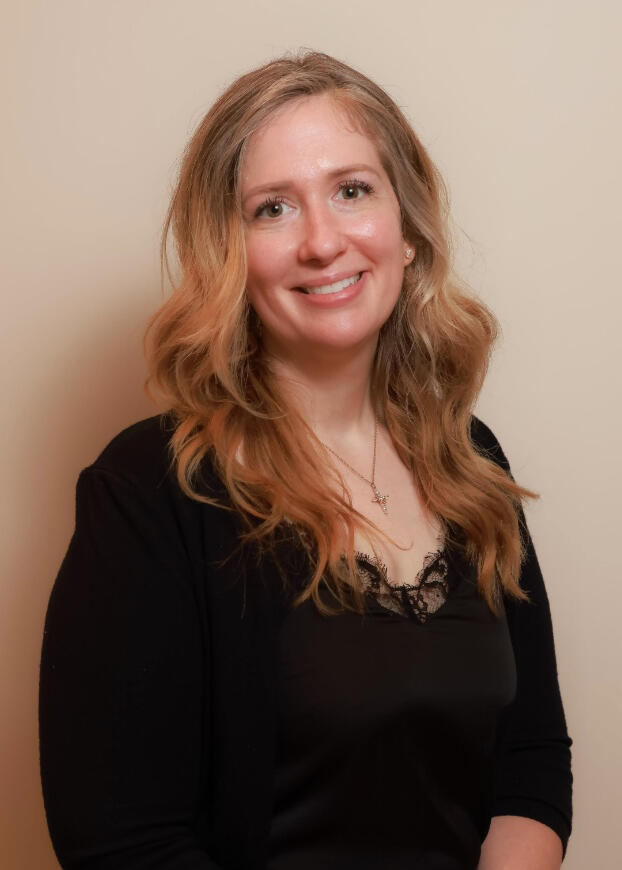
Meg Kristine
Meg Kristine, License #LA8860
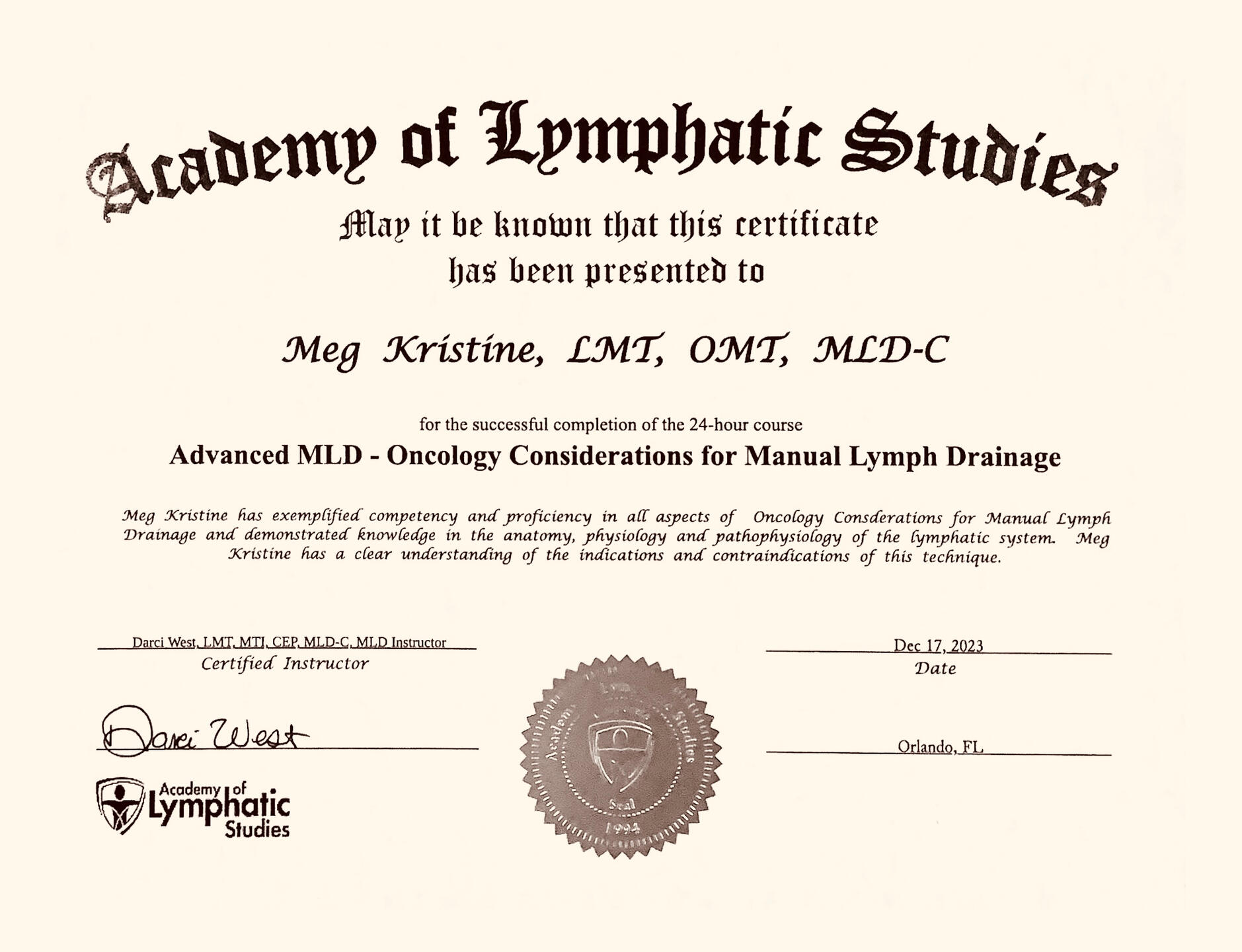
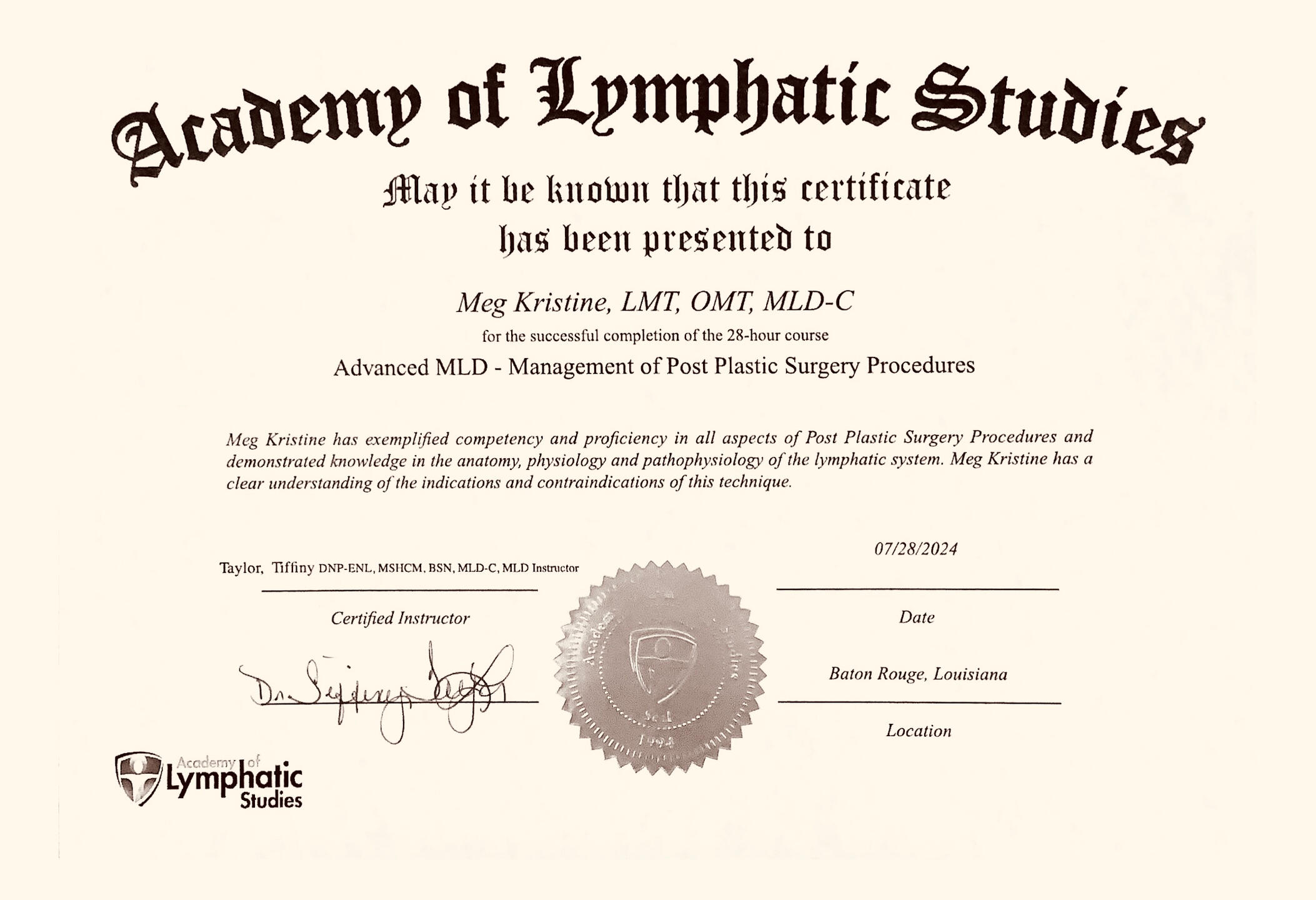
LMT, OMT, MMP, CIMI, CPMT, MLD-C (abbreviations below)My name is Meg Kristine & I've been a Licensed Massage Therapist since 2012. I’m Certified in Massage Therapy for Wellness, Autism, Oncology, Palliative, & Hospice (for both Adult and Pediatric Populations). I’m also Certified in Medical Massage Therapy, which is interwoven into my regular Massage Practice. I’m a Registered Member and Preferred Practitioner of The Society for Oncology Massage (www.S4OM.org). I’m twice certified in Manual Lymphatic Drainage (Vodder Technique), with Advanced Secondary Training & Certifications in both Oncology Considerations & Post-Plastic Surgery Procedures.I'm not only passionate about the work that I do, I’m honored to be able to do it. My hope is that with the above skillsets, I’m able to best meet each client where they are, & assist them on their individual path to healing.-LMT: Licensed Massage Therapist
-OMT: Oncology Massage Therapist
-MMP: Medical Massage Practitioner
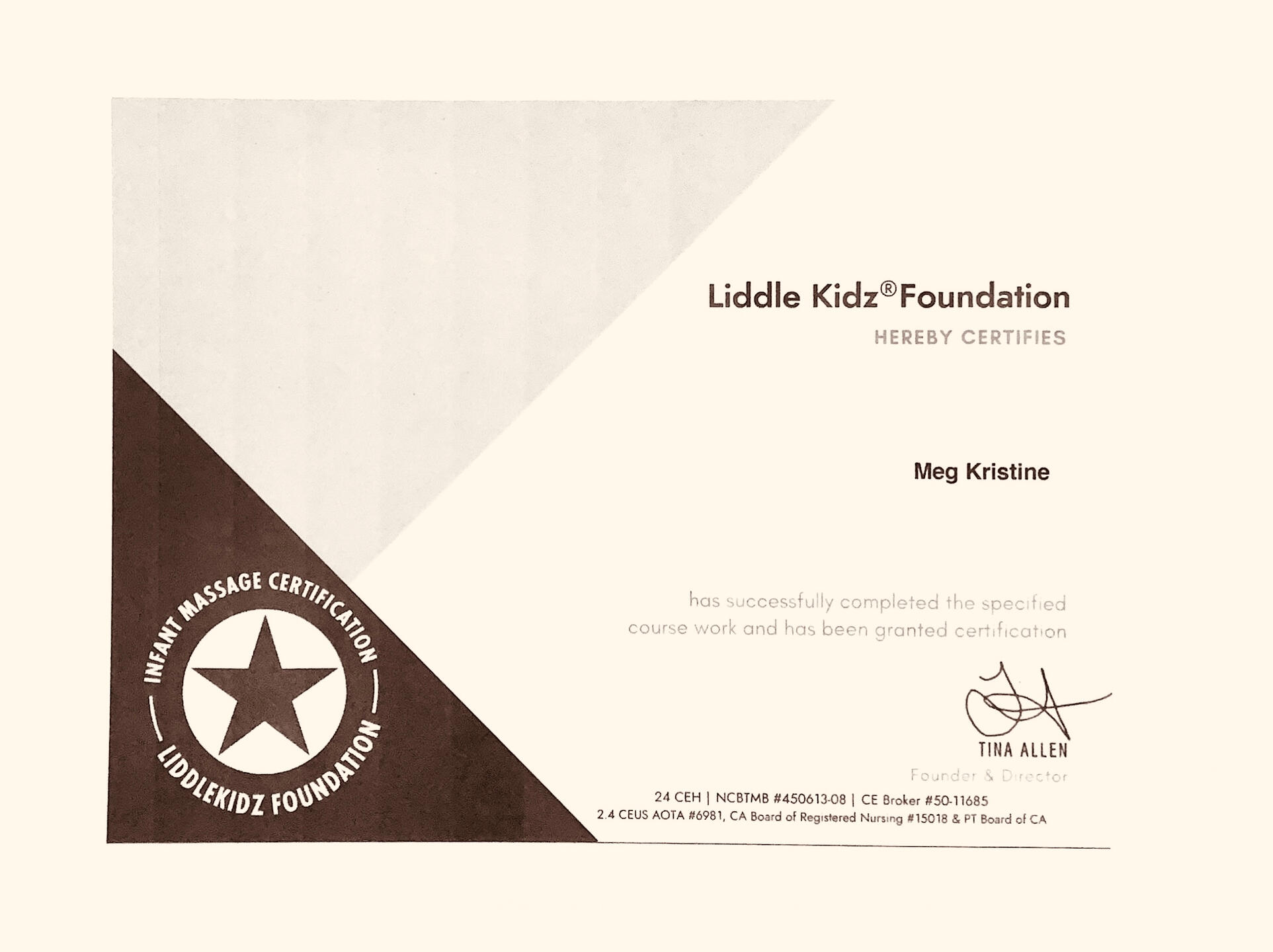
-CIMI: Certified Infant Massage Instructor
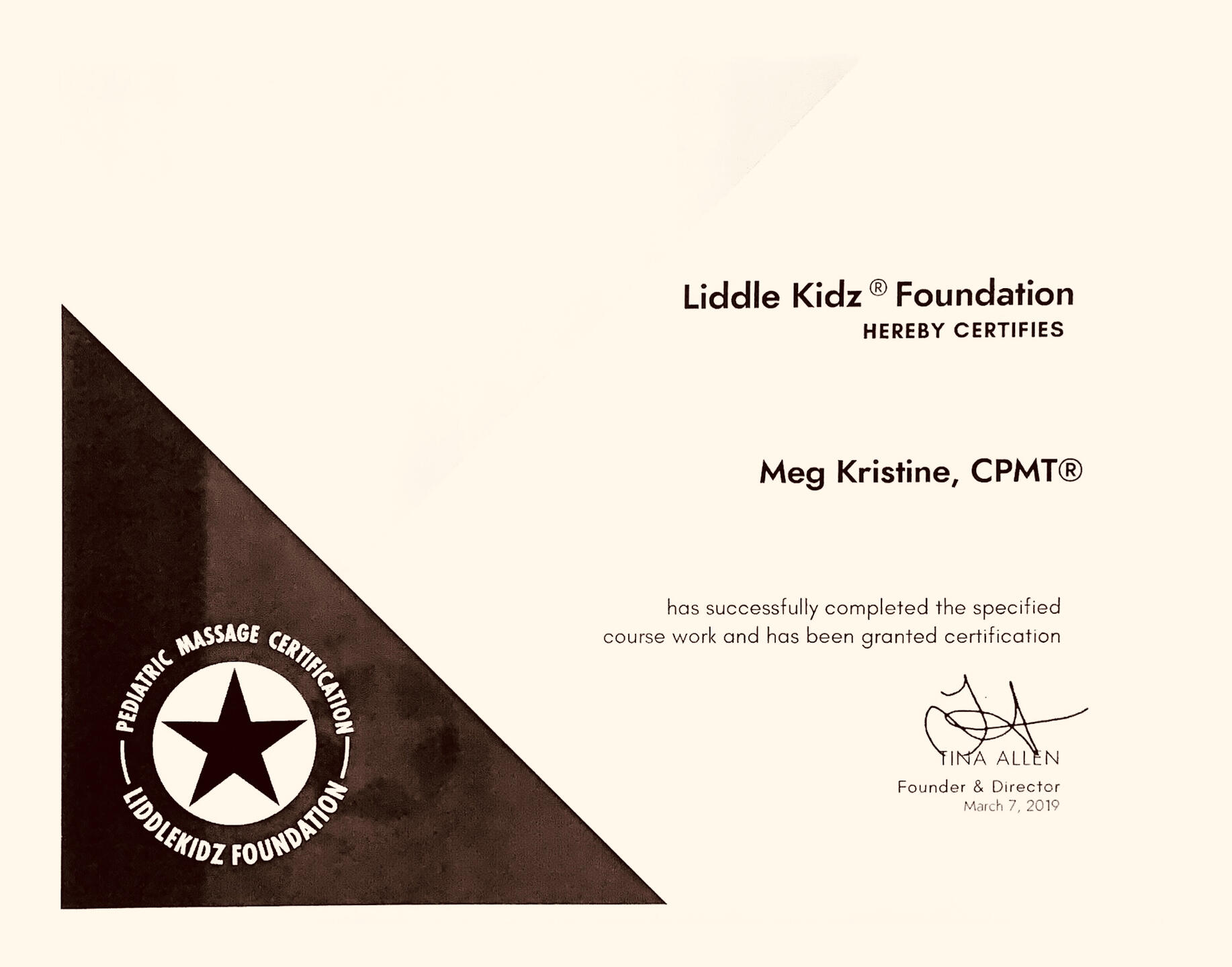
-CPMT: Certified Pediatric Masage Therapist
-MLD-C: Manual Lymph Drainage Certified
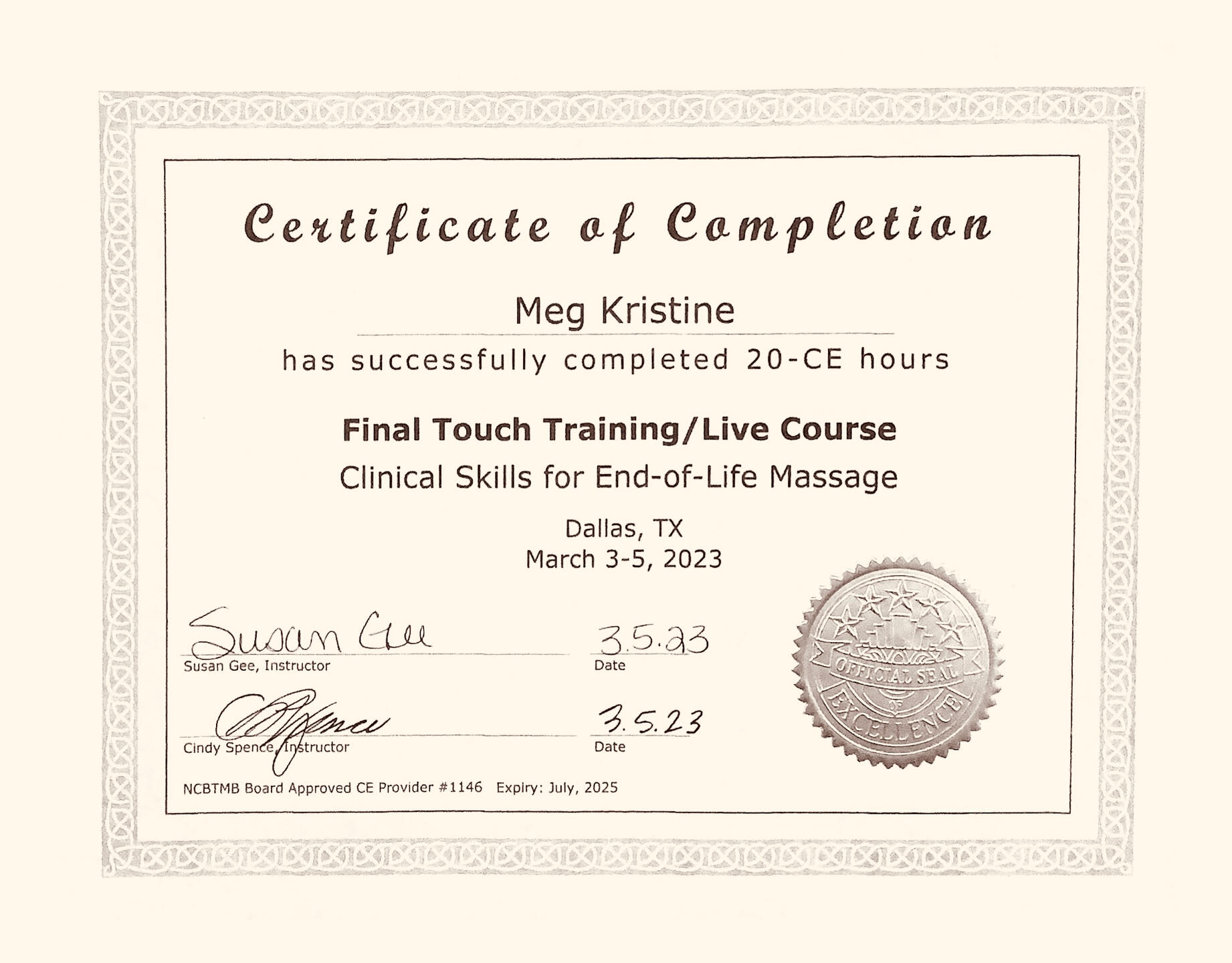
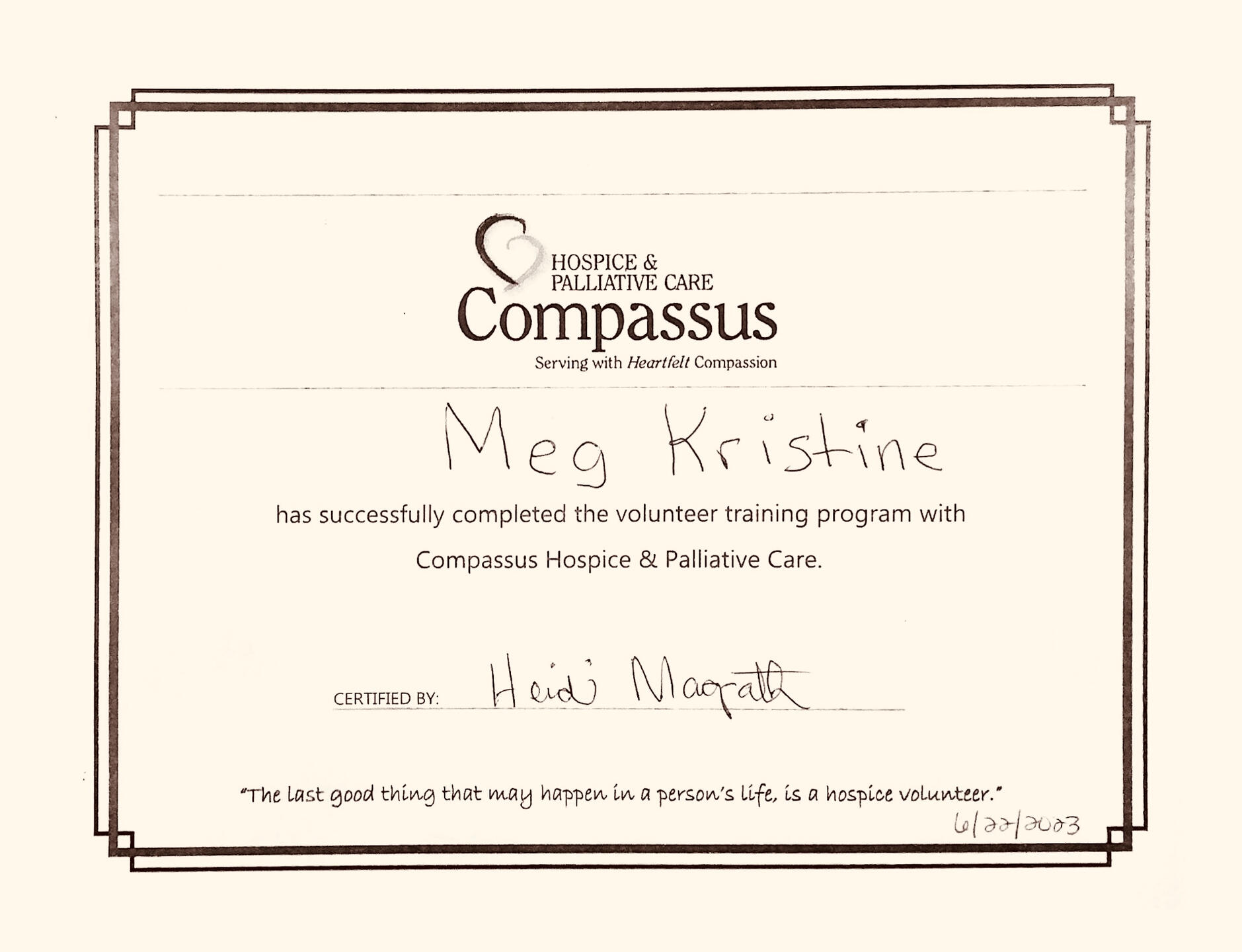
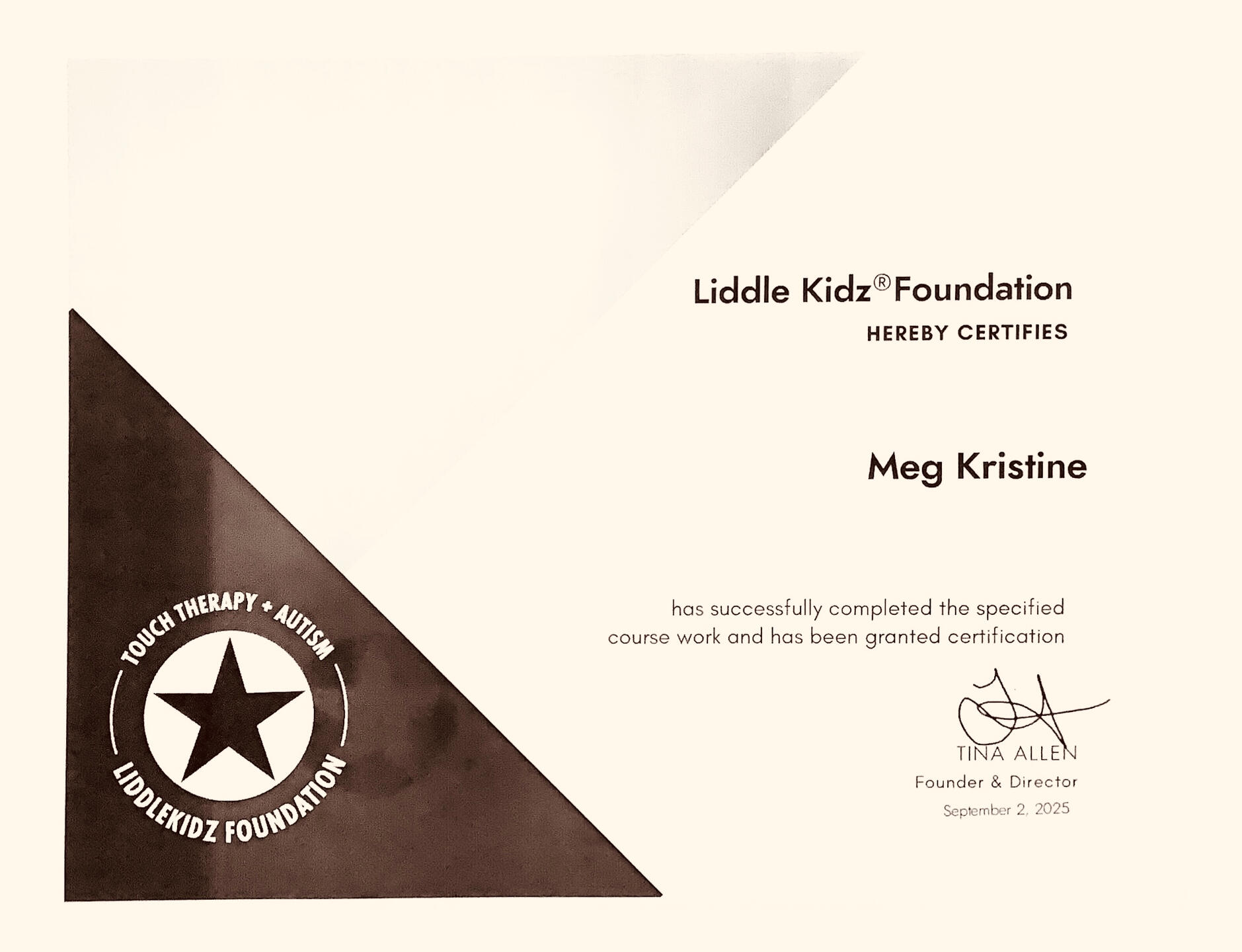
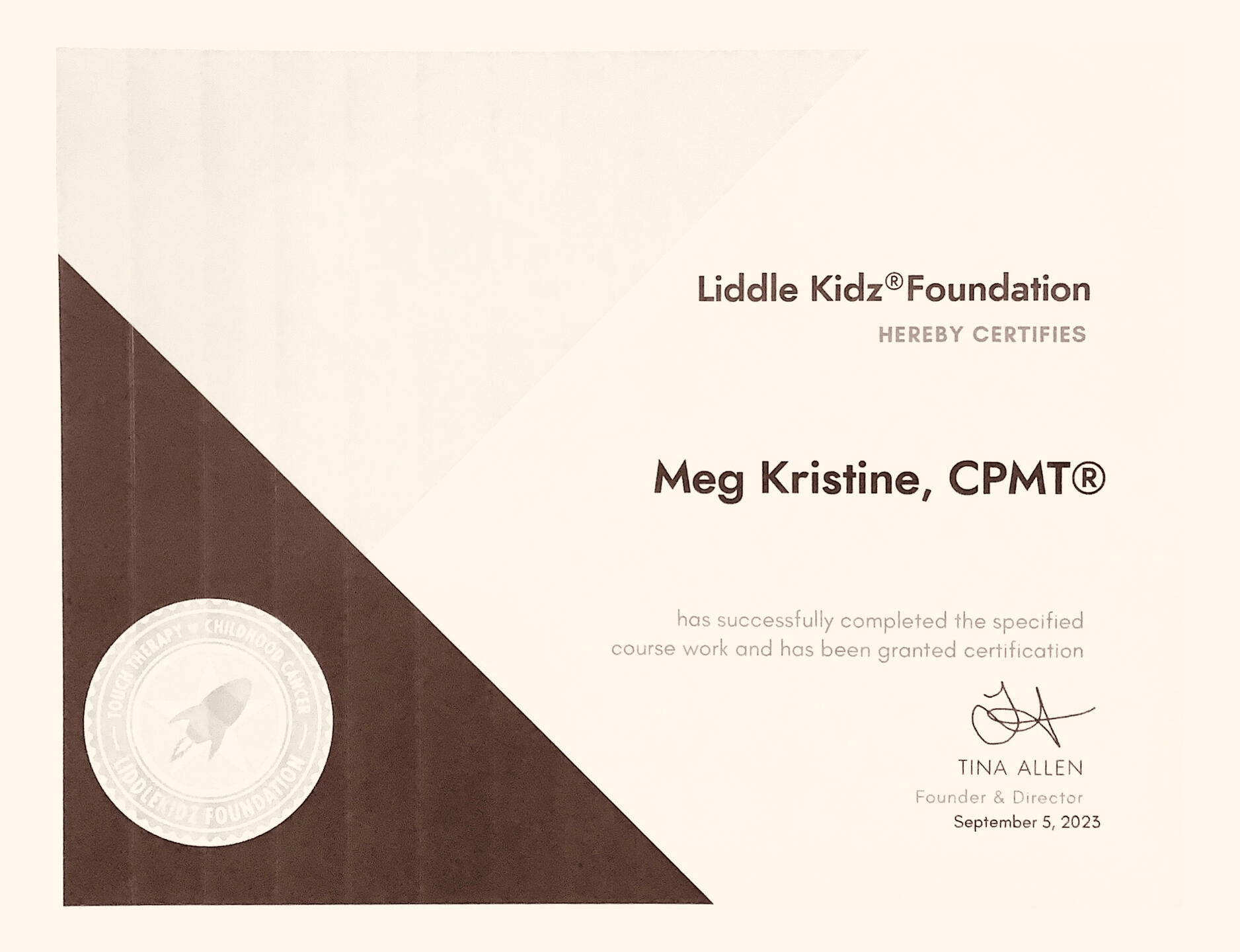
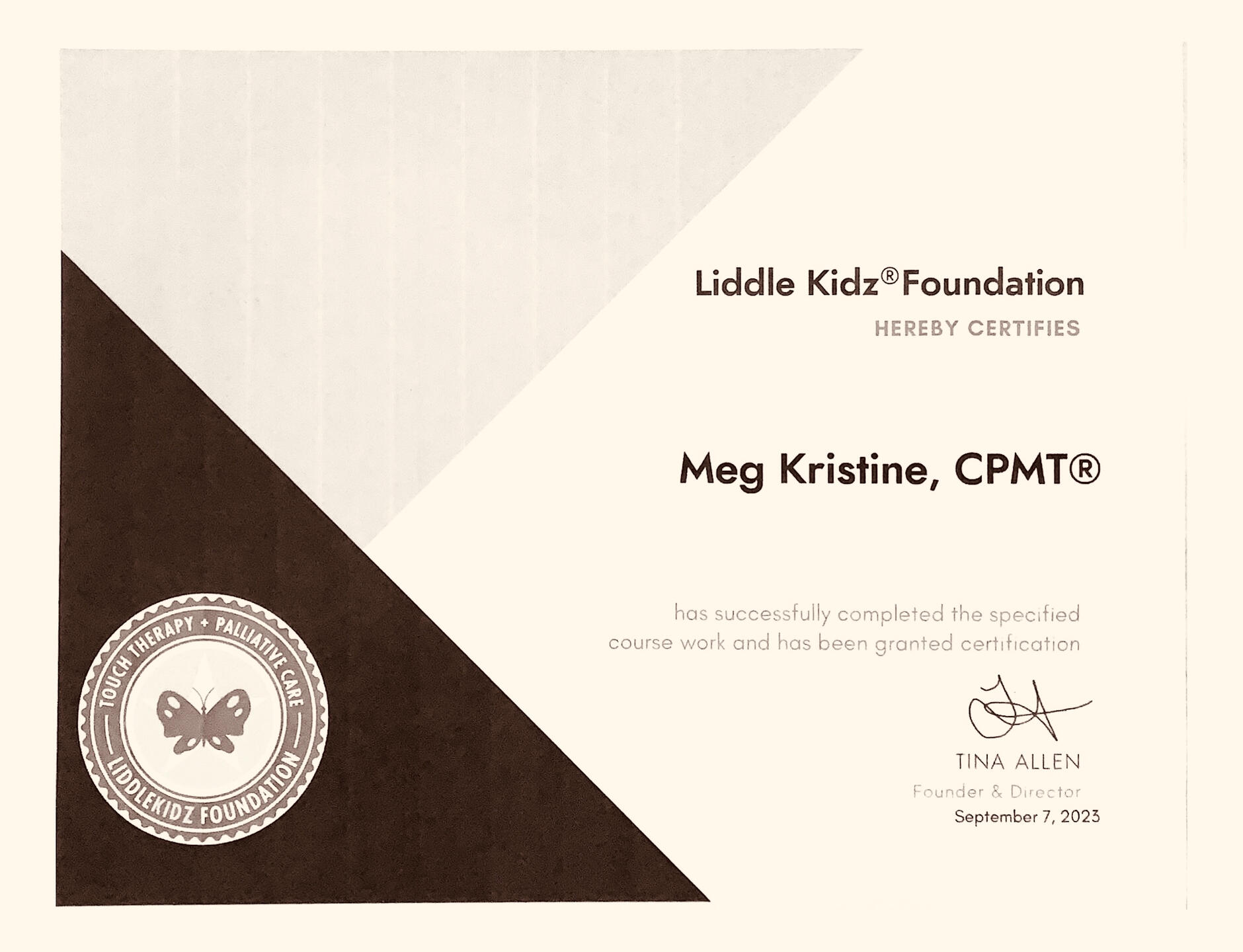
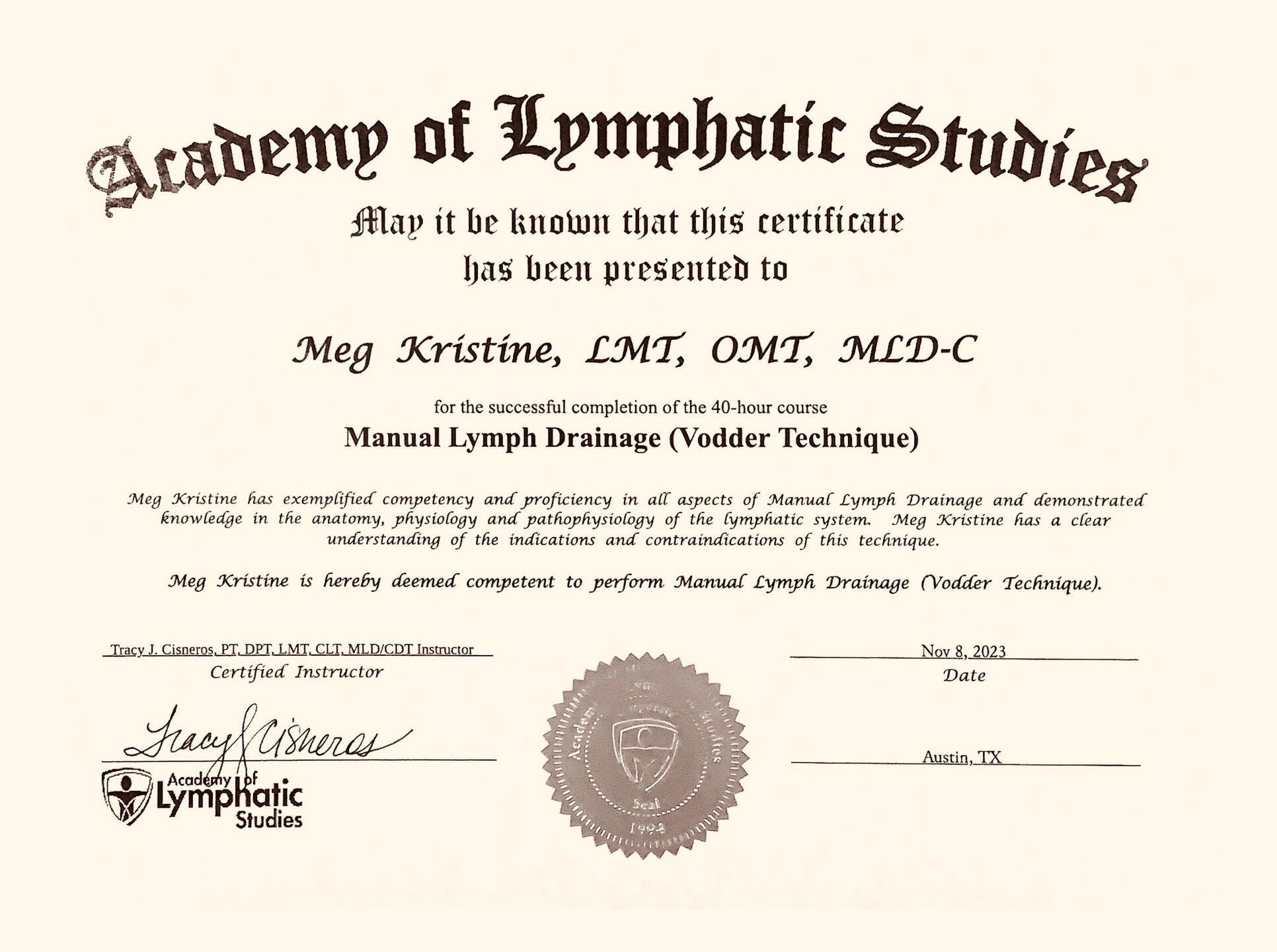
Certifications
Meg Kristine, LMT, OMT, MMP, CIMI, CPMT, MLD-C
LA License: LA #8860Massage & Touch Therapy Certificates:

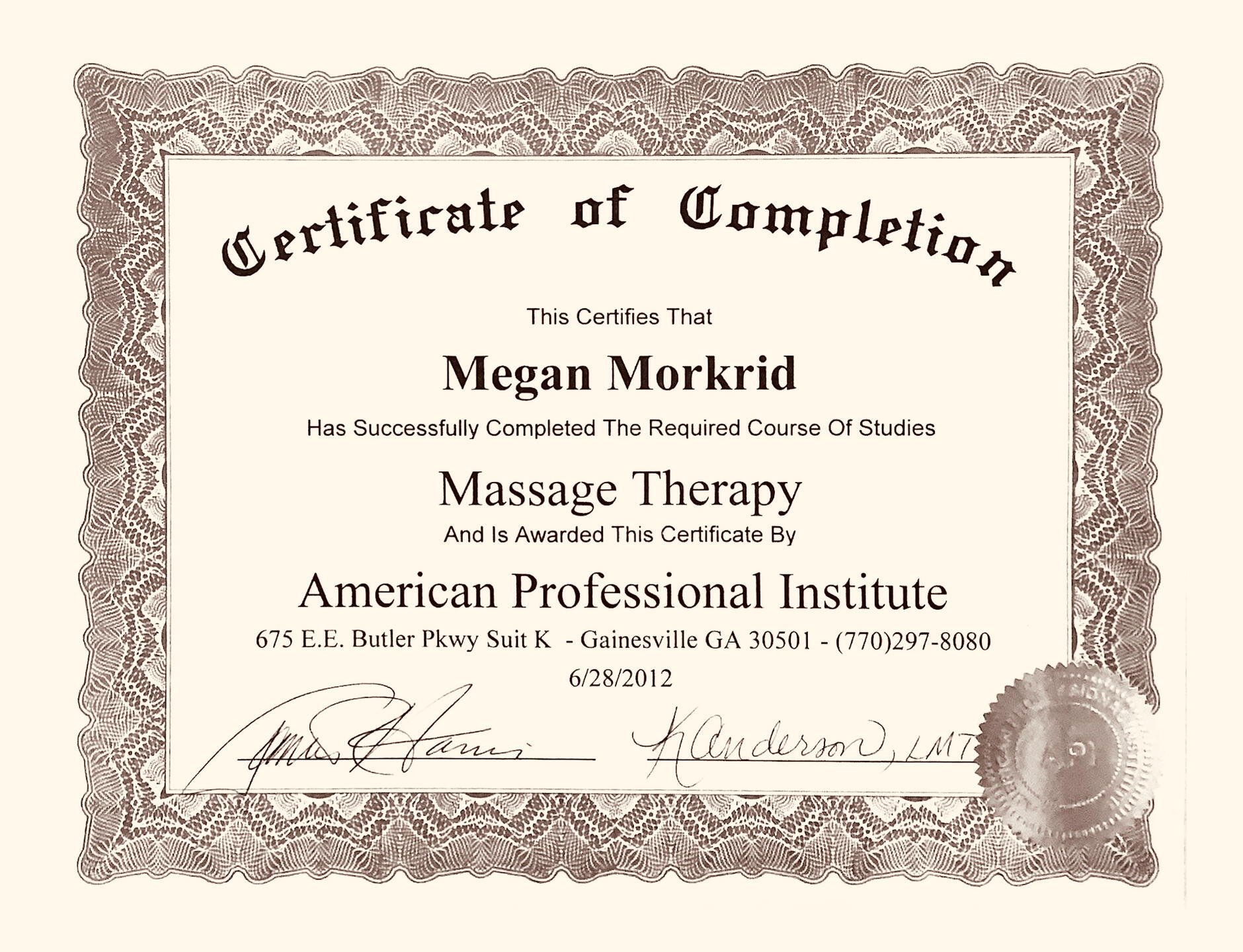
Massage Therapy

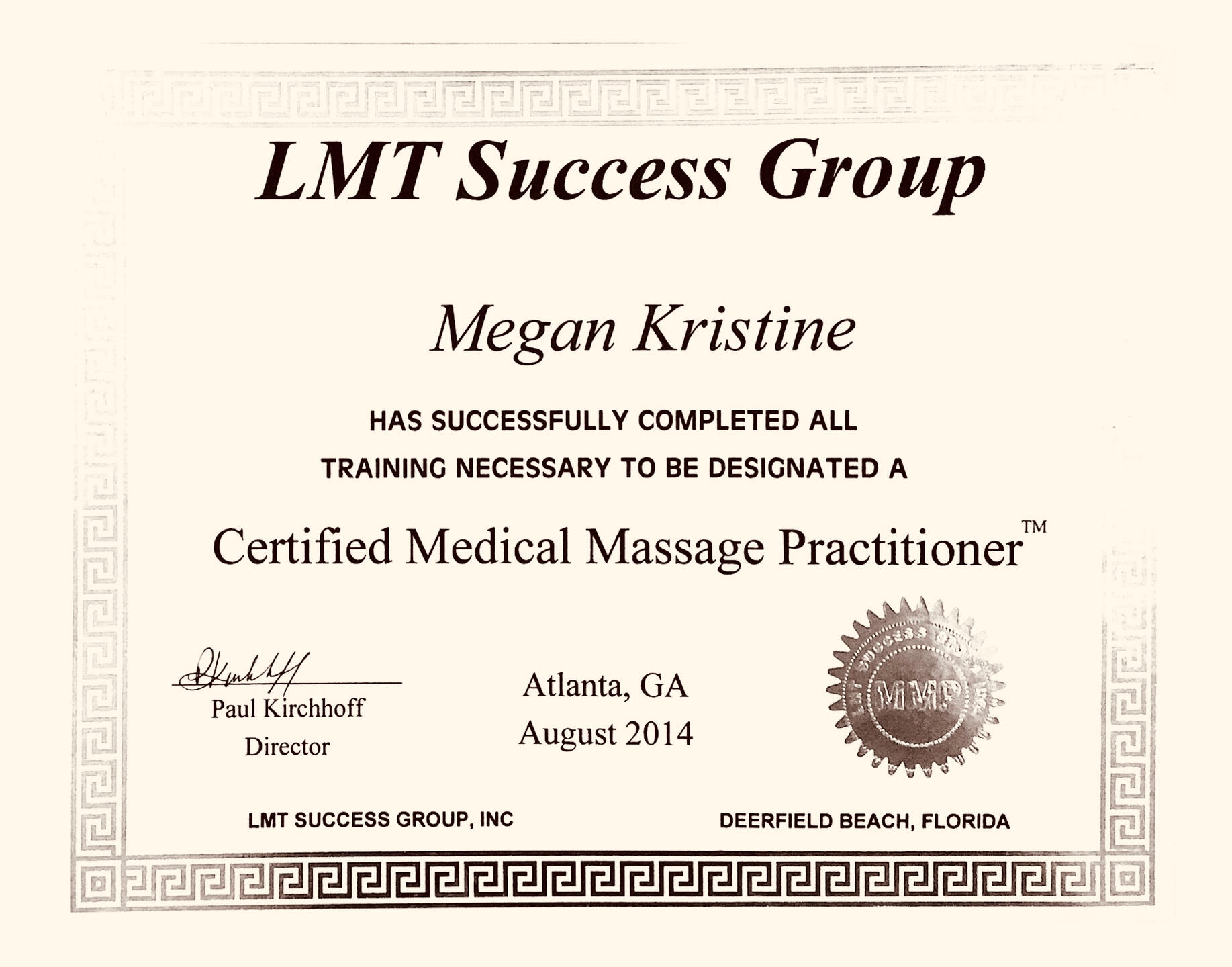
Medical Massage Therapy

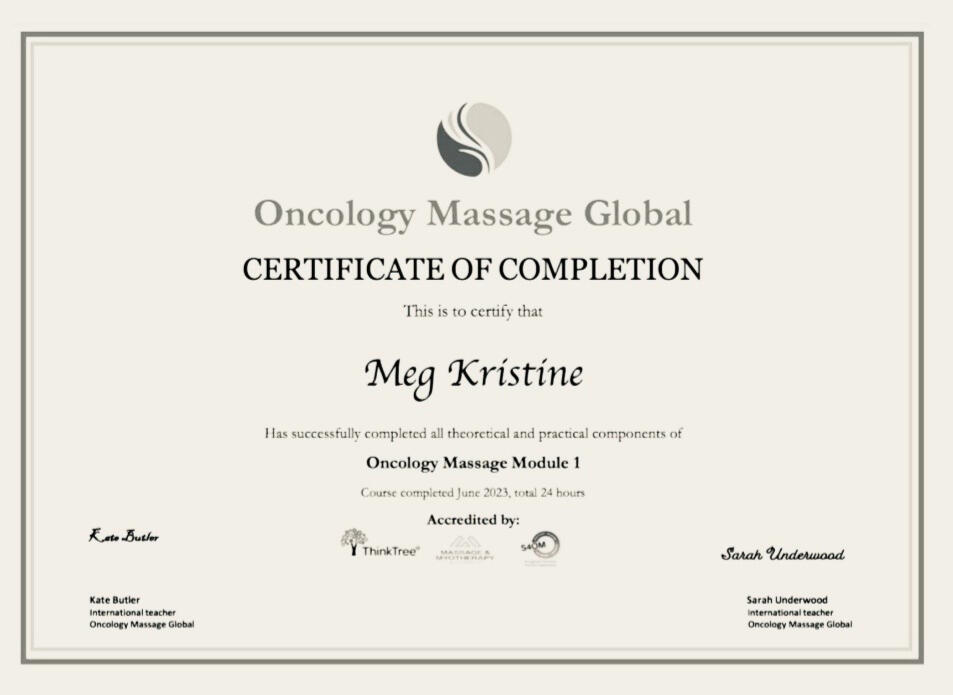
Oncology Massage & Touch Therapy 1/2

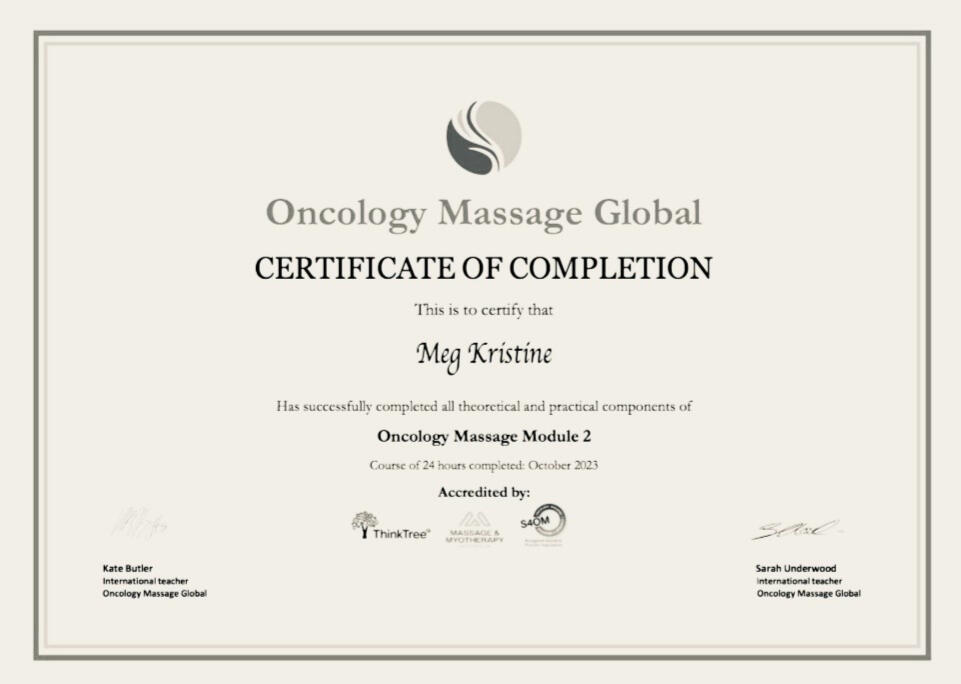
Oncology Massage & Touch Therapy 2/2

Palliative/Hospice Massage & Touch Therapy

Palliative/Hospice Volunteer Work

Infant Massage & Touch Therapy Instructor

Pediatric Massage & Touch Therapy

Pediatric Autism Massage & Touch Therapy

Pediatric Oncology Massage & Touch Therapy

Pediatric Palliative/Hospice Massage & Touch Therapy

MLD- Manual Lymphatic Drainage (Vodder Technique)

Advanced MLD with Oncology Considerations

Advanced MLD for Post Plastic Surgery Procedures
Contact Me
Message Successfully Sent.
Thank you!